
Portland, OR & Surrounding Areas
Overspray Removal in Portland, OR
Portland . Hillsboro . Tigard . Beaverton . Vancouver and More

4.9

500+ Reviews
What overspray is
Where It Comes From
- Building and apartment repainting, especially exterior projects using airless sprayers.
- Road striping and parking-lot restriping, which leaves traffic paint specks on lower panels and tires.
- Construction and renovation work nearby, including roofing, stucco, fencing and deck coatings.
- Industrial and auto body spraying in nearby shops.
- Bridge and infrastructure maintenance, a common source around freeway projects.
- Fallout from other airborne contaminants, such as asphalt mist, which looks similar and requires related treatment.
Why It Happens A Lot Around Portland
The Portland metro is busy with building. Apartment complexes, condos, and commercial buildings go through repaint cycles, and new construction keeps adding to the skyline. Summer is the main exterior painting season because paint needs dry, moderate weather, and that’s when we get the most calls. Cars parked in apartment lots, office parking, and along streets near active job sites are the most vulnerable. Wind can carry overspray farther than you’d expect, which is why people often find it a block or two from where the work was happening.
Sometimes the only warning is a notice taped to your door or a conversation with a neighbor. Other times, you find out when the car already looks like it’s been dusted with powdered sugar.
How To Tell If It’s Overspray
- The paint feels rough or gritty after washing.
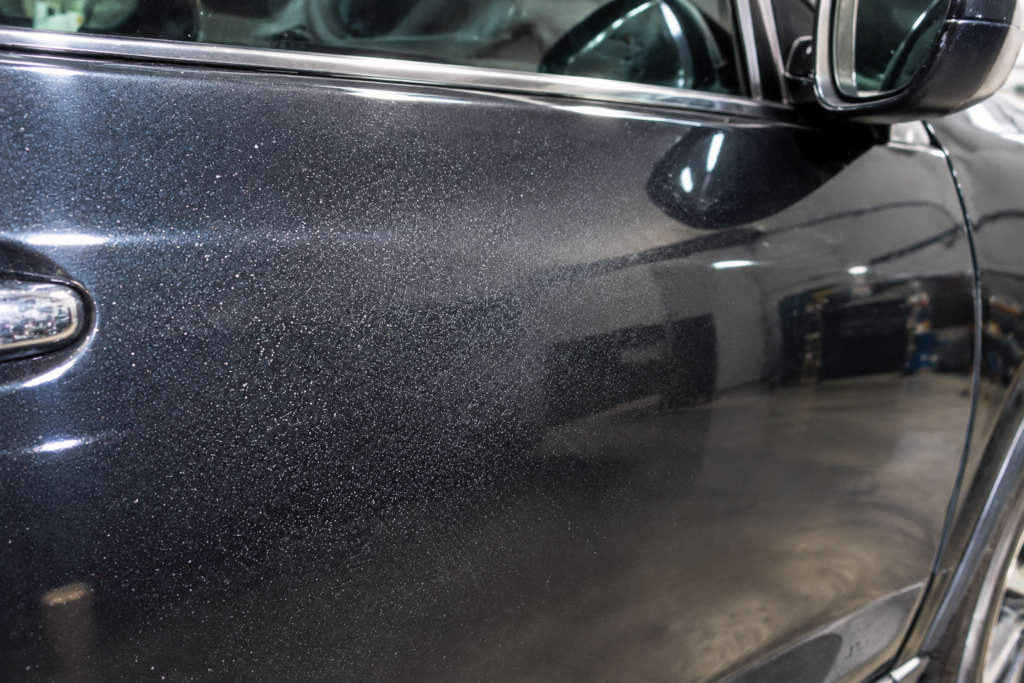
- You can see tiny specks in a color that doesn’t match your paint.
- The specks appear mostly on upward-facing and one side of the car, matching wind direction.
- Glass, trim and wheels have specks too.
- A plastic sandwich bag placed over your hand and rubbed lightly over the paint makes the roughness easier to feel.
If you’re not sure, send us photos. We can often tell what’s going on by looking.
Our Paint Overspray Removal Process
Identify the contaminant.
Wash and rinse.
Test a small area.
Chemical decontamination.
Clay treatment.
Glass and trim treatment.
Polish if needed.
Protect.
What affects the outcome
Serving All Of Portland Area and Nearby Cities
Get an overspray removal quote
This service can only be added as an add on to any of the full car detailing packages or exterior only packages.
Prices shown are starting prices. Add-ons are additional. Pet hair removal and stain removal require add-on services.
Overspray Removal FAQ
How much does overspray removal cost in Portland?
Your quote depends on how much overspray is on the vehicle, how long it’s been there, and what type of paint it is. We give you a written estimate after inspection.
Can overspray be removed without damaging my paint?
Yes, in most cases. With the right method, such as a clay treatment or a suitable overspray remover, we can lift paint from the surface without harming the clear coat. Heavy or old overspray may require polishing.
How do I know if it’s overspray or just dirt?
Overspray can feel gritty even after a wash and often looks like tiny specks in a color that doesn’t match your car. If the specks are still there after regular washing, they may be overspray.
Can I remove it myself?
Some light cases can be handled with a clay bar and proper lubricant. Avoid harsh solvents like acetone or paint thinner, which can damage clear coat and trim.
Does overspray damage car paint if left on?
It can. Overspray can become harder to remove the longer it sits, especially in the sun, and it may etch or stain the paint. Have it checked as soon as you can.
Who pays if a contractor sprayed my car?
That depends on the circumstances and the parties involved. Take photos of the damage, report it in writing to the contractor or property manager, and keep your receipts. We can provide an invoice for the work.
Still have questions?